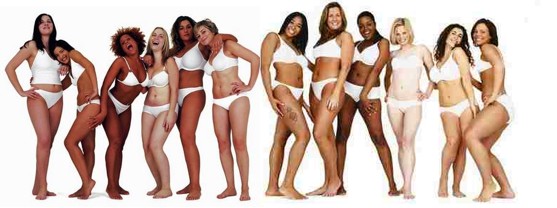
In cross cultural journalism, we learned how ad companies can appeal to an audience and send the same message with different pictures depending on who the audience is. Marketers create ads to trigger a certain emotional reaction in people, so they must use a certain representation to appeal to different groups. However, it's important to distinguish the message sent as an advertising strategy, not the message the makers stand behind, as illustrated in the Dove v Axe controversy. While the makers of Dove were hailing themselves accepting of all women in their true beauty campaign, ax, owned by the same people, featured sexy models, adhering them to sexist stereotypes and physical idolization.
Look at these two campaigns:
Dove Ad Campiagn: http://thesituationist.files.wordpress.com/2007/10/dove-models-real-beauty.jpg
Axe Campaign: http://blog.lib.umn.edu/raim0007/gwss3307_fall2007/axe.jpg
How does this company represent itself?


Don't forget to sign your posts with your name! Or else I have no idea who to grade...
ReplyDeleteMarilyn
I think that the Axe campaign is catering to a different group of people so therefore, use different marketing skills. The Dove campaign clearly represents itself as seeing every woman as beautiful. However, the Axe campaign represents itself as a company based on the importance of image. I think there is such a difference in the two campaigns even tho they are owned by the same people because of the audience. I also think it is the product and the message they are selling that causes the difference.
ReplyDeleteJessie Pietroburgo
I would have to agree with Jessie that the Dove campaign is targeting women. They are of all shapes, sizes, and races yet they all seem confident. They are laughing and joking around; truly being comfortable in their own skin. That is what makes them beautiful. However, the Axe campaign is something that could be seen in a men’s magazine. The woman in this image is white, thin, and well endowed. This is the ideal image of sexy in today’s culture. The two images are representing the complete opposite effect in women. The Axe image wouldn’t boost a woman’s confidence if she didn’t fit into these criteria, but on the other hand the Dove image strives to accept all types. This company is representing “sexy” to the men and “beautiful” to the women.
ReplyDeleteLauren
I would have to agree with the above comments as well. The two campaigns are targeting two different audiences entirely. Axe commercials are filled with young, attractive women who are depicted by society to be “perfect” and “ideal.” However, the audience is mostly directed towards testosterone-filled men, telling them that if they use Axe, young, attractive woman would throw themselves at them in the reaction to the fragrance. Axe puts certain women in their adds in the hopes of arousing their male customers and convincing them to buy their product. Even though Axe commercials are speaking to men, it is inevitable that women see these images as well. This is when the Dove campaign comes in to play. The goal of the Dove campaign is to have girls feel comfortable in their own skin. It shows that women can be of any age, shape or size and still be considered “beautiful.” Dove teaches women that just because they do not look like what the media portrays is “ideal,” that they are still thriving and successful women. Not only are the two campaigns different in the fact that Dove speaks mostly to women, and Axe speaks mostly to men, but they are also selling two different things as well. Yes, Axe and Dove both sell an actual product, but the Dove campaign goes a step farther and targets women’s self-esteem in the hopes of boosting it. Dove wants women to be confident and comfortable with themselves no matter what they look like.
ReplyDelete